After A Dutch spy, Jan Huyghen van Linschoten, copied Portuguese nautical maps while working as secretary for the Portuguese Archbishop of Goa in the 1580s, his published maps and books enabled the maritime passage to the elusive East Indies to be opened to the English and the Dutch. This allowed the British East India Company and the Dutch East India Company to break the 16th century monopoly enjoyed by the Portuguese on trade with the East Indies (Indonesia) and the Spice Islands (Moluccas), though not without a great deal of bloodshed. The Portuguese East India Company lost its stranglehold on East Indies trade and commerce, and was liquidated in 1633.
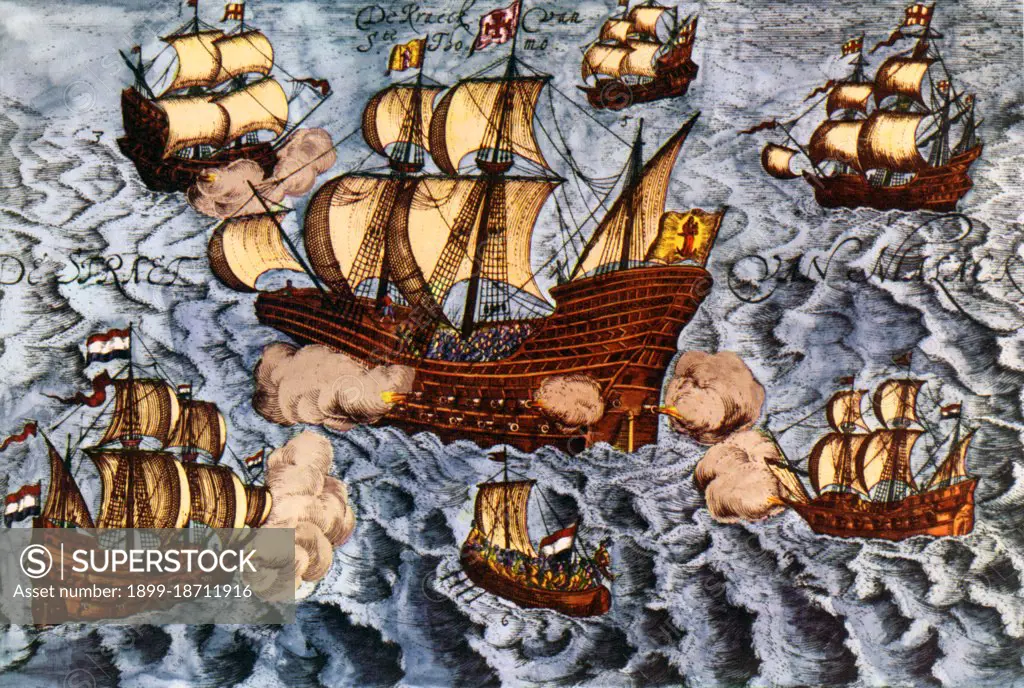
SuperStock offers millions of photos, videos, and stock assets to creatives around the world. This image of After A Dutch spy, Jan Huyghen van Linschoten, copied Portuguese nautical maps while working as secretary for the Portuguese Archbishop of Goa in the 1580s, his published maps and books enabled the maritime passage to the elusive East Indies to be opened to the English and the Dutch. This allowed the British East India Company and the Dutch East India Company to break the 16th century monopoly enjoyed by the Portuguese on trade with the East Indies (Indonesia) and the Spice Islands (Moluccas), though not without a great deal of bloodshed. The Portuguese East India Company lost its stranglehold on East Indies trade and commerce, and was liquidated in 1633. by Pictures From History/Universal Images is available for licensing today.
Looking for a license?
Click here, and we'll help you find it! Questions? Just ask!
Click here, and we'll help you find it! Questions? Just ask!
DETAILS
Image Number: 1899-18711916Rights ManagedCredit Line:Pictures From History/Universal Images/SuperStockCollection:Universal Images Contributor:Pictures From History Model Release:NoProperty Release:NoResolution:5111×3436